
 By Asfand Yar Khan
What Do Electricians Do? A Complete Guide to Electrical Work
Table of Contents
- What Is an Electrician? (Quick Overview)
- Core Responsibilities of Electricians
- Types of Electricians and What They Do
- A Day in the Life of an Electrician
- Common Electrical Tasks Electricians Perform
- Tools and Equipment Electricians Use Daily
- Skills Required to Be an Electrician
- When Should You Call an Electrician?
- Frequently Asked Questions
- Conclusion
- About us
Whether you’re considering a career in the electrical trade, need to hire an electrician, or simply want to understand what these skilled professionals do, this comprehensive guide covers everything you need to know about the work electricians perform every day.
From installing complex wiring systems in new construction to troubleshooting flickering lights in your home, electricians play a critical role in keeping our modern world powered safely and efficiently
What Is an Electrician? (Quick Overview)
An electrician is a skilled tradesperson who specializes in the installation, maintenance, and repair of electrical systems and equipment. These professionals work with everything from the wiring in your walls to industrial power systems in manufacturing facilities.
Electricians must complete extensive training—typically including a 4-5 year apprenticeship combining classroom education with hands-on experience—and obtain licensing to ensure they can work safely with potentially dangerous electrical systems.
According to the Bureau of Labor Statistics, electricians held approximately 762,600 jobs in the United States as of 2023, making it one of the largest skilled trades in the country.
The bottom line: Electricians are highly trained professionals who ensure electrical systems function safely, efficiently, and in compliance with strict building codes
Core Responsibilities of Electricians
Electricians handle a wide range of tasks that go far beyond simply “working with wires.” Let’s explore their primary responsibilities.
Installing Electrical Systems
One of the most fundamental jobs electricians perform is installing complete electrical systems in new construction or during major renovations.
This includes:
- Running electrical wiring through walls, ceilings, and floors
- Installing electrical panels and circuit breakers
- Setting up outlets, switches, and junction boxes
- Connecting fixtures to power sources
- Establishing proper grounding systems
- Installing dedicated circuits for appliances and equipment
Electricians must carefully plan these installations based on blueprints and building specifications, calculating electrical loads to ensure systems can handle power demands safely.
Repairing and Troubleshooting
When electrical problems occur, electricians use specialized knowledge and diagnostic tools to identify and fix issues.
Common repairs include:
- Diagnosing why circuit breakers trip repeatedly
- Fixing outlets that don’t work or spark
- Repairing flickering or non-functioning lights
- Replacing faulty wiring
- Fixing electrical panel problems
- Addressing ground fault issues
- Resolving power surges and voltage problems
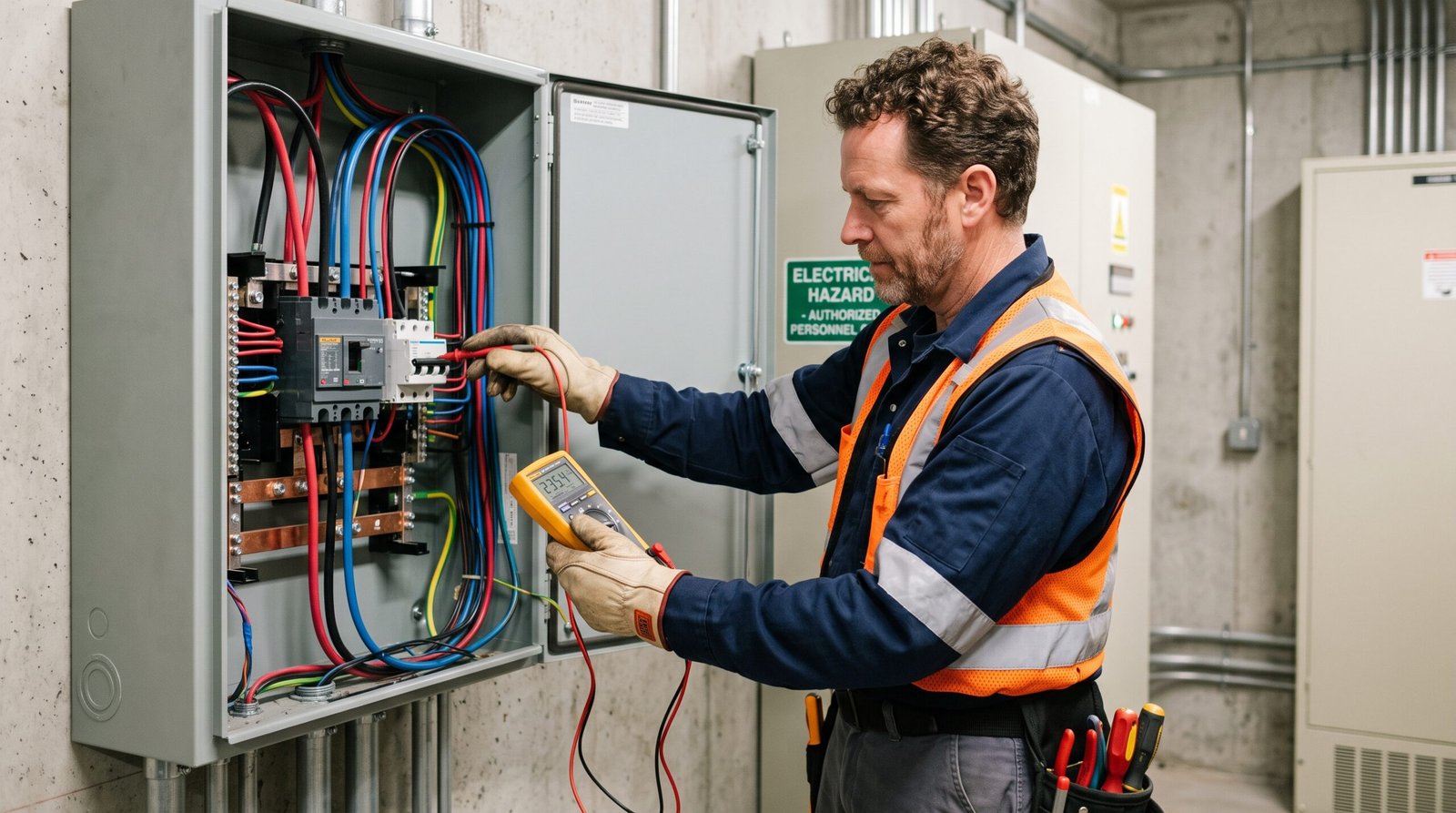
Electricians use multimeters, voltage testers, thermal imaging cameras, and other diagnostic equipment to pinpoint problems that aren’t visible to the naked eye.
Maintenance and Inspections
Preventive maintenance is a crucial part of electrical work, especially in commercial and industrial settings.
Maintenance tasks include:
- Conducting routine safety inspections
- Testing GFCI and AFCI protection devices
- Checking for loose connections that could cause fires
- Inspecting electrical panels for signs of wear
- Testing backup generators and emergency systems
- Identifying potential code violations
- Recommending upgrades to outdated systems
Regular electrical inspections can prevent dangerous situations like electrical fires, which account for an estimated 51,000 fires annually in the United States, according to the National Fire Protection Association.
Reading Blueprints and Technical Diagrams
Professional electricians must be able to read and interpret complex technical documents:
- Blueprints and architectural plans – Show where electrical components should be installed
- Wiring diagrams – Illustrate how circuits should be connected
- Electrical schematics – Detail the technical specifications of systems
- Load calculations – Determine electrical capacity requirements
- Code specifications – Ensure compliance with regulations
This technical reading ability allows electricians to execute installations precisely according to engineering specifications.
Ensuring Safety and Code Compliance
Perhaps the most critical responsibility of any electrician is ensuring all electrical work meets safety standards and building codes.
This involves:
- Following the National Electrical Code (NEC)
- Adhering to local building codes and regulations
- Implementing OSHA safety protocols
- Obtaining necessary permits and inspections
- Using appropriate wire gauges for electrical loads
- Installing proper overcurrent protection
- Ensuring adequate grounding and bonding
- Installing GFCI protection in wet locations
- Using AFCI protection to prevent electrical fires
Electricians stay current with code changes through continuing education, as electrical codes are updated every three years to incorporate new safety standards and technologies.
Types of Electricians and What They Do
Electricians often specialize in specific areas based on the environments they work in and the types of systems they handle.
Residential Electricians
Residential electricians work primarily in homes, apartments, and small residential buildings.
Their typical work includes:
- Wiring new homes and additions
- Installing and repairing lighting fixtures
- Adding new outlets and switches
- Upgrading electrical panels (from 100-amp to 200-amp service, for example)
- Installing ceiling fans and chandeliers
- Setting up home automation and smart home systems
- Installing EV charging stations in garages
- Troubleshooting household electrical problems
- Ensuring homes meet electrical code for sales and renovations
Residential electricians must balance technical expertise with customer service skills, as they frequently interact directly with homeowners and explain electrical issues in understandable terms.
Commercial Electricians
Commercial electricians specialize in electrical systems for businesses, retail spaces, office buildings, and other commercial properties.
Their work involves:
- Installing complex lighting systems for retail and office spaces
- Setting up three-phase power systems
- Installing and maintaining commercial HVAC electrical components
- Wiring for security systems and access control
- Installing backup generators and emergency power systems
- Running data and communication cabling
- Maintaining parking lot and exterior lighting
- Ensuring ADA compliance for electrical installations
- Working with building management systems
Commercial electrical work often involves larger-scale projects and more complex electrical loads than residential work.
Industrial Electricians
Industrial electricians work in factories, manufacturing plants, processing facilities, and other industrial environments.
They typically handle:
- High-voltage power distribution systems
- Motor controls and programmable logic controllers (PLCs)
- Industrial machinery electrical systems
- Conveyor systems and automated equipment
- Transformers and power distribution equipment
- Industrial control panels
- Emergency shutdown systems
- Preventive maintenance on production equipment
- Troubleshooting to minimize costly production downtime
Industrial electricians often work with voltages and systems significantly more complex than residential or commercial electricians encounter.
Maintenance Electricians
While all electricians perform some maintenance, maintenance electricians specifically focus on the ongoing upkeep of electrical systems.
Their responsibilities include:
- Performing scheduled preventive maintenance
- Conducting routine safety inspections
- Replacing components before they fail
- Maintaining emergency backup systems
- Keeping detailed maintenance records
- Identifying and addressing potential problems early
- Ensuring continuous system reliability
Maintenance electricians often work for large facilities, property management companies, or institutions like hospitals and universities
A Day in the Life of an Electrician
What does a typical workday look like for an electrician? While every day brings different challenges, here’s a representative schedule.
Morning: Job Planning and Site Preparation
6:00 AM – 8:00 AM
Most electricians start their day early:
- Review the day’s work orders – Check scheduled jobs, locations, and specific tasks
- Load the work van – Ensure all necessary tools, materials, and safety equipment are on hand
- Travel to the first job site – Residential electricians might visit 3-5 homes daily, while commercial electricians might spend all day on a single large project
- Meet with clients or project managers – Discuss the work to be performed and any concerns
- Assess the job site – Evaluate the work area, identify potential hazards, and plan the approach
- Turn off power – Use lockout/tagout procedures to ensure safe working conditions
Midday: Hands-On Electrical Work
8:00 AM – 3:00 PM
The bulk of the workday involves hands-on electrical tasks:
- Running new wiring through walls, attics, or conduit systems
- Installing electrical boxes for outlets, switches, and fixtures
- Connecting circuits at the electrical panel
- Mounting and wiring light fixtures, ceiling fans, or appliances
- Troubleshooting problems using diagnostic equipment
- Making repairs by replacing faulty components
- Installing safety devices like GFCI outlets and smoke detectors
- Working with other trades (coordinating with plumbers, HVAC technicians, or general contractors)
Throughout the day, electricians constantly reference code requirements, measure voltages and currents, and ensure all connections are secure.
Afternoon: Testing, Troubleshooting, and Client Communication
3:00 PM – 5:00 PM
The end of the day focuses on quality assurance and customer satisfaction:
- Test all work – Use multimeters and circuit testers to verify proper operation
- Restore power – Turn circuits back on and verify everything functions correctly
- Clean up the work area – Remove debris and leave the site clean
- Walk through with the client – Explain the work performed and answer questions
- Document the job – Complete work orders, note materials used, and record time
- Return to the shop or home – Restock the van for the next day
- Plan tomorrow’s work – Review upcoming jobs and special material needs
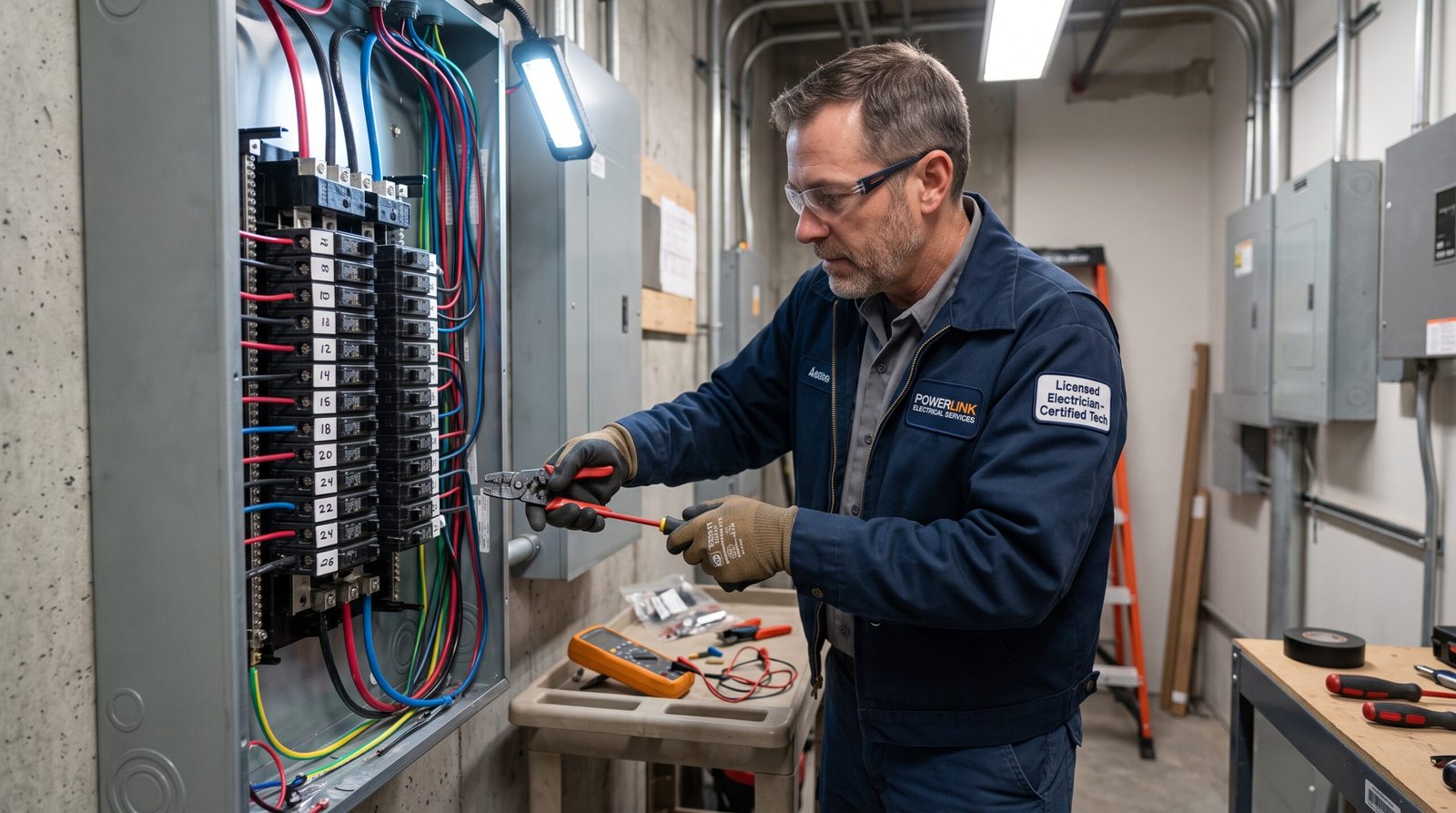
Many electricians also spend time in the evening studying code updates, learning new technologies, or working toward advanced certifications
Common Electrical Tasks Electricians Perform
Let’s look at specific projects electricians commonly handle.
Wiring New Homes and Buildings
New construction electrical work involves installing complete electrical systems from the ground up.
The process includes:
- Rough-in phase – Installing wiring, boxes, and conduit before walls are closed
- Service entrance – Connecting to the utility power source
- Main panel installation – Setting up the electrical panel with appropriate circuit breakers
- Branch circuit wiring – Running circuits to all areas of the building
- Specialty circuits – Installing dedicated circuits for appliances, HVAC, and high-power equipment
- Trim-out phase – Installing outlets, switches, light fixtures, and cover plates after walls are finished
- Final testing and inspection – Verifying all systems work properly and meet code
New construction provides electricians the opportunity to design efficient electrical systems tailored to the building’s specific needs.
Installing Lighting Fixtures and Outlets
Adding or replacing lights and outlets is one of the most common electrical tasks.
This work includes:
- Installing recessed can lights
- Mounting chandeliers and pendant lights
- Adding outdoor security lighting
- Installing dimmer switches
- Adding new outlets in convenient locations
- Installing USB charging outlets
- Setting up dedicated circuits for home offices
- Installing GFCI outlets in bathrooms and kitchens
While these might seem like simple tasks, they require knowledge of proper wiring techniques, box fill calculations, and code requirements for spacing and placement.
Upgrading Electrical Panels
As homes add more electrical devices and appliances, many older electrical panels need upgrading.
Panel upgrades involve:
- Removing the old electrical panel
- Installing a new, higher-capacity panel (typically upgrading from 100-amp to 200-amp service)
- Upgrading the service entrance conductors
- Reorganizing circuits for better load balance
- Adding arc-fault and ground-fault protection
- Labeling all circuits clearly
- Coordinating with the utility company for service upgrades
- Ensuring the new panel meets current code requirements
An electrical panel upgrade is a complex job that requires a permit and inspection in most jurisdictions.
Installing EV Charging Stations
As electric vehicles become more popular, electricians increasingly install home EV chargers.
EV charger installation requires:
- Evaluating the existing electrical service capacity
- Installing a dedicated 240-volt circuit
- Running appropriate wiring (typically 6-gauge or larger)
- Mounting the charging station
- Configuring smart features and connectivity
- Testing the installation
- Obtaining necessary permits and inspections
Most Level 2 home chargers require a 40-50 amp circuit, which is a significant electrical load that must be properly planned.
Emergency Electrical Repairs
Electricians often respond to urgent situations that pose safety hazards.
Common emergencies include:
- Complete power outages
- Burning smells from outlets or panels
- Sparking outlets or switches
- Exposed wiring
- Water damage to electrical systems
- Tripped breakers that won’t reset
- Storm damage to electrical systems
- Electrical shocks from appliances or fixtures
Emergency electricians must diagnose problems quickly and implement safe solutions, often working outside normal business hours.
Tools and Equipment Electricians Use Daily
Electricians rely on specialized tools to perform their work safely and efficiently.
Essential hand tools:
- Wire strippers – Remove insulation from wires
- Lineman’s pliers – Cut, twist, and pull wire
- Needle-nose pliers – Work in tight spaces
- Screwdrivers – Both flathead and Phillips in various sizes
- Fish tape – Pull wire through walls and conduit
- Cable cutters – Cut large electrical cables
- Knockout punches – Create holes in electrical panels
- Conduit benders – Shape conduit for installations
Testing and diagnostic equipment:
- Multimeter – Measures voltage, current, and resistance
- Voltage tester – Quickly checks if circuits are live
- Circuit tracer – Identifies which breaker controls which circuit
- Thermal imaging camera – Detects hot spots that indicate problems
- Continuity tester – Verifies complete circuits
- Ground resistance tester – Ensures proper grounding
- Clamp meter – Measures current without disconnecting wires
Power tools:
- Cordless drill/driver – Drills holes and drives screws
- Reciprocating saw – Cuts through various materials
- Hole saw kit – Creates holes for electrical boxes
- Wire pulling equipment – For large wire runs
- Hammer drill – Drills into concrete and masonry
Safety equipment:
- Insulated gloves – Protect against electrical shock
- Safety glasses – Eye protection
- Hard hat – Head protection on construction sites
- Voltage-rated tools – Insulated to prevent shock
- Arc flash protection – For high-voltage work
- Lockout/tagout equipment – Prevents accidental energization
Professional electricians invest thousands of dollars in quality tools that will last throughout their careers
Skills Required to Be an Electrician
Becoming a successful electrician requires a diverse skill set that goes beyond technical knowledge.
Technical Knowledge
Electricians must understand:
- Electrical theory (Ohm’s Law, power calculations, circuit analysis)
- The National Electrical Code and local amendments
- Reading and interpreting blueprints and schematics
- Proper wiring methods and techniques
- Grounding and bonding requirements
- Circuit protection and overcurrent devices
- Different electrical systems (single-phase, three-phase, DC)
- Emerging technologies (solar, EV charging, smart home systems)
- Mathematics for load calculations and wire sizing
This knowledge base requires years of study and practical application to fully develop.
Problem-Solving Abilities
Electricians constantly face unique challenges that require creative problem-solving:
- Diagnosing intermittent electrical problems
- Finding solutions in older buildings with non-standard wiring
- Troubleshooting complex systems with multiple potential issues
- Adapting plans when unexpected obstacles arise
- Determining the most cost-effective solutions for clients
- Identifying the root cause of recurring problems
The best electricians approach problems methodically, using both technical knowledge and experience-based intuition.
Physical Stamina and Dexterity
Electrical work is physically demanding:
Electricians must be able to:
- Work in awkward positions (overhead, in tight spaces, kneeling)
- Lift and carry heavy equipment and materials (up to 50-75 pounds)
- Climb ladders and work at heights
- Stand for extended periods
- Have good hand-eye coordination for detailed work
- Maintain steady hands when making precise connections
- Work outdoors in various weather conditions
- Navigate construction sites safely
Good physical fitness helps prevent injuries and extends careers in this demanding trade.
Communication Skills
Electricians must communicate effectively with various people:
They need to:
- Explain electrical issues to homeowners in understandable terms
- Listen carefully to customer concerns and symptoms
- Coordinate with other trades on construction sites
- Write clear documentation and reports
- Provide accurate estimates and timelines
- Teach and mentor apprentices
- Communicate safety concerns to supervisors
- Negotiate with inspectors regarding code interpretations
Strong communication builds trust with clients and creates smoother project execution.
When Should You Call an Electrician?
While some home maintenance tasks are DIY-friendly, electrical work should almost always be left to licensed professionals.
Call an electrician when you experience:
Safety concerns:
- Burning smells from outlets, switches, or the electrical panel
- Sparking or arcing from electrical components
- Outlets or switches that are warm to the touch
- Frequent electrical shocks when using appliances
- Buzzing or sizzling sounds from electrical devices
- Scorch marks on outlets or switches
- Circuit breakers that trip frequently
Functional problems:
- Flickering or dimming lights (especially when appliances turn on)
- Dead outlets or switches
- Partial power outages (some rooms work, others don’t)
- Lights that surge or fade
- Outlets that don’t hold plugs securely
Installation and upgrade needs:
- Adding new outlets or lighting
- Installing ceiling fans or chandeliers
- Upgrading your electrical panel
- Installing dedicated circuits for appliances
- Adding EV charging stations
- Whole-house surge protection
- Generator installation and hookup
- Smart home system installation
Renovations and additions:
- Kitchen or bathroom remodels
- Room additions
- Finishing basements or attics
- Pool or hot tub installations
- Outdoor kitchen or living space electrical
Inspections and maintenance:
- Home purchase inspections
- After storms or flooding
- In older homes (40+ years) that haven’t been updated
- Before selling your home
- Routine safety inspections
Experiencing electrical issues? Don’t risk DIY electrical work. Our certified electricians are available 24/7 for emergencies and scheduled appointments. [Get a Free Quote →]
Remember: Electrical work requires permits and inspections in most jurisdictions. Unlicensed electrical work can void insurance coverage, create safety hazards, and cause problems when selling your home
Frequently Asked Questions About What Electricians Do
What is the main job of an electrician?
The main job of an electrician is to install, maintain, and repair electrical power systems in residential, commercial, and industrial settings. This includes working with wiring, circuit breakers, transformers, outlets, lighting fixtures, and electrical panels to ensure safe and reliable electricity distribution.
What does an electrician do on a daily basis?
On a daily basis, electricians read blueprints and technical diagrams, install wiring and electrical components, troubleshoot electrical problems, test systems for safety, repair faulty equipment, and ensure all work complies with the National Electrical Code and local building regulations.
What are the different types of electricians?
The main types of electricians are:
- Residential electricians – Work in homes and apartments
- Commercial electricians – Handle office buildings and retail spaces
- Industrial electricians – Service factories and manufacturing plants
- Maintenance electricians – Focus on preventive maintenance and repairs
Do electricians only work with wiring?
No, electricians work with much more than just wiring. They install and maintain lighting systems, electrical panels, circuit breakers, outlets, switches, generators, EV charging stations, security systems, and various electrical appliances. They also perform safety inspections and troubleshoot complex electrical issues.
When should I call an electrician?
You should call a licensed electrician when you experience flickering lights, frequent circuit breaker trips, burning smells from outlets, need new outlets or lighting installed, plan to upgrade your electrical panel, want to install an EV charger, or any time you need electrical work to ensure it’s done safely and to code.
Can electricians work on both new construction and existing buildings?
Yes, electricians work on both new construction projects and existing buildings. In new construction, they install complete electrical systems from scratch. In existing buildings, they perform repairs, upgrades, renovations, and maintenance work.
How do electricians ensure electrical safety?
Electricians ensure safety by following the National Electrical Code (NEC), using proper grounding techniques, installing GFCI and AFCI protection where required, conducting thorough testing with specialized equipment, using appropriate wire sizes for electrical loads, and staying current with safety training and licensing requirements.
Do electricians need to be licensed?
Yes, electricians must be licensed in most jurisdictions. They typically start as apprentices, become journeyman electricians after completing training and passing exams, and can advance to master electrician status with additional experience and testing. Licensing ensures they have the knowledge to work safely and effectively.
How long does it take to become an electrician?
Becoming a licensed electrician typically takes 4-5 years. This includes completing an apprenticeship program that combines approximately 8,000 hours of hands-on training with 576-1,000 hours of classroom instruction. After the apprenticeship, electricians must pass a licensing exam.
What’s the difference between a journeyman and master electrician?
A journeyman electrician has completed their apprenticeship and passed the journeyman licensing exam. They can work independently but typically under the supervision of a master electrician. A master electrician has additional years of experience (usually 2-4 years beyond journeyman), has passed a more comprehensive exam, and can supervise other electricians, pull permits, and run their own electrical contracting business.
Conclusion: The Essential Role of Electricians
Electricians perform far more than just “working with wires”—they are skilled professionals who design, install, maintain, and repair the electrical systems that power our modern lives.
To summarize what electricians do:
✓ Install complete electrical systems in new construction
✓ Troubleshoot and repair electrical problems
✓ Perform safety inspections and preventive maintenance
✓ Upgrade outdated electrical panels and systems
✓ Ensure all work meets strict safety codes and regulations
✓ Work with advanced technologies like EV charging and smart home systems
✓ Respond to emergency electrical situations
✓ Specialize in residential, commercial, or industrial settings
Their work requires a unique combination of technical knowledge, problem-solving skills, physical capability, and attention to safety. Through years of training and continuous education, electricians master complex electrical codes and systems that keep homes, businesses, and industrial facilities running safely and efficiently.
Whether you’re experiencing electrical problems, planning renovations, or simply want to upgrade your home’s electrical capacity, professional electricians bring the expertise necessary to complete the job correctly and safely.