
 By Asfand Yar Khan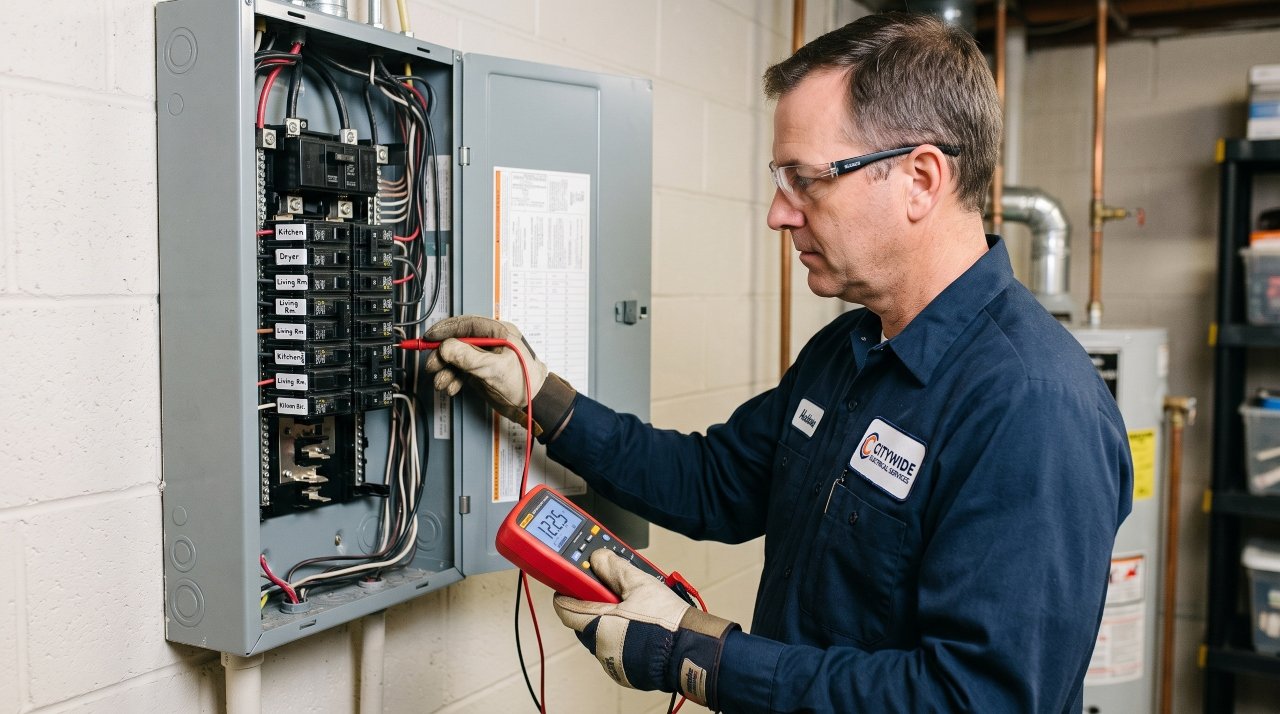
Electrical Safety Inspections powers our daily lives, but unmanaged electrical systems represent one of the single greatest risks to property safety. According to the National Fire Protection Association (NFPA), electrical failures or malfunctions cause an estimated 45,000 home structure fires each year, leading to hundreds of preventable injuries and hundreds of millions in property damage.
A professional electrical safety inspection identifies hidden fire hazards, code violations, and inefficient equipment before they escalate into dangerous emergencies or costly unexpected repairs.
Whether you are buying a home, upgrading appliances, or managing a rental property, this complete guide breaks down what an inspection covers, why it matters, and what to expect during the process.
Table of Contents
- What Is an Electrical Safety Inspection?
- General Home Inspection vs. Specialized Electrical Inspection
- When Do You Need an Electrical Safety Inspection?
- The Inspection Checklist: What Electricians Audit
- Advanced Diagnostic Tools Used by Professionals
- How Much Does an Inspection Cost?
- Understanding Your Inspection Report
- Frequently Asked Questions
- Schedule Your Safety Inspection
What Is an Electrical Safety Inspection?
An electrical safety inspection is an operational and structural evaluation of your property’s entire electrical network. Performed by a certified, licensed electrician, this assessment examines your wiring, circuit panels, outlets, switches, grounding systems, and safety devices against the stringent criteria of the National Electrical Code (NEC) and local municipal codes.
Unlike routine home maintenance, an inspection focuses directly on:
- Fire Hazard Prevention: Identifying loose connections, overloaded circuits, and degraded wire insulation.
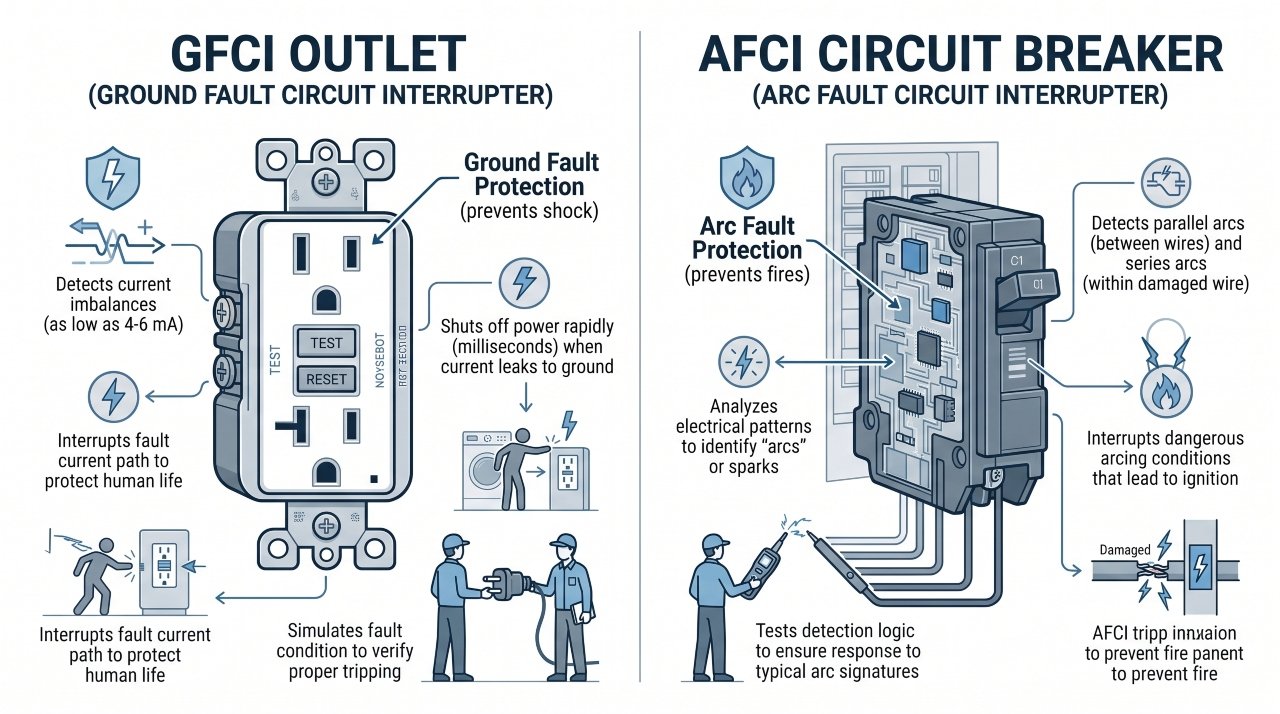
- Shock & Electrocution Hazard Mitigation: Ensuring all wet-area outlets use Ground Fault Circuit Interrupters (GFCIs).
- Code Compliance: Verifying that past renovations or DIY updates meet legal electrical codes.
- System Capacity: Confirming your breaker box can safely handle modern power demands.
General Home Inspection vs. Specialized Electrical Inspection
Many property owners assume that the general home iElectrical Safety Inspections completed during a real estate sale is sufficient. While general inspectors play an important role, their scope is strictly limited and non-invasive.
| Feature / Capability | General Home Inspector | Licensed Master Electrician |
|---|---|---|
| Visual Check of Outlets & Switches | Yes | Yes |
| Breaker Box Dead-Front Panel Removal | Rare / Limited | Yes (Full Internal Audit) |
| Thermal Imaging Hot-Spot Detection | Rarely Included | Standard Professional Practice |
| System Load & Voltage Drop Calculation | No | Yes |
| Detailed Code Violation Identification | Basic Overview | Comprehensive Legal & Safety Audit |
| Ability to Repair On-Site | No (Forbidden by law) | Yes (Can provide immediate quotes & fixes) |
A specialized electrical safety check goes beyond surface-level aesthetics to evaluate the hidden connections inside walls, junctions, and main service panels where dangerous thermal build-ups occur.
When Do You Need an Electrical Safety Inspection?
Safety experts recommend having your electrical framework assessed under the following specific circumstances:
1. Purchasing or Selling a Property
Never close on a residential or commercial property without an independent electrical audit. Uncovering outdated systems—such as ungrounded two-prong outlets or hazardous wiring—gives you leverage in real estate negotiations and protects you from buying hidden liabilities.
2. Homes Aged 40 Years or Older
Properties built prior to the late 1980s often contain outdated wiring methods that were not engineered for modern electrical consumption (such as EV chargers, HVAC systems, and high-wattage electronics):
- Knob-and-Tube Wiring: Common in homes built before 1950; lacks a ground wire and deteriorates inside wall cavity insulation. (Learn more about replacing outdated wiring).
- Aluminum Wiring: Popular in the late 1960s and 1970s; highly prone to oxidation, expansion, loosening, and severe fire risks at termination points.
- Obsolete Breaker Panels: Legacy panels (e.g., Federal Pacific Electric Stabs, Zinsco, or old fuse boxes) often fail to trip during an overload, creating an active fire danger.
3. Major Home Renovations or Appliance Installs
Installing high-draw appliances—such as hot tubs, induction ranges, solar systems, or EV charging stations—requires significant capacity. An inspection determines whether your current system can manage the extra load or if you require an electrical panel upgrade.
4. Warning Signs and Nuisance Breaker Tripping
If you notice any of the following symptoms, request an inspection immediately:
- Outlets or switch plates that feel warm or look discolored/charred.
- Persistent circuit breaker trips or flickering lights.
- A faint burning smell coming from appliances or wall cavities.
- Buzzing, sizzling, or popping sounds behind walls.
(If you observe active sparks or burning odors, turn off power at the main breaker and request an emergency electrician.)
The Inspection Checklist: What Electricians Audit
During a comprehensive visit, a technician moves methodically through your property following a standardized evaluation protocol.
+-------------------------------------------------------------------+
|               ELECTRICAL SAFETY INSPECTION AUDIT                  |
+-------------------------------------------------------------------+
|  1. Main Service Panel    --> Breakers, bus bars, grounding wire  |
|  2. Branch Circuits       --> Wire gauge, insulation, junction box|
|  3. Outlets & Receptacles --> Voltage, polarity, GFCI & AFCI checks|
|  4. Surge Protection      --> Whole-home surge devices            |
|  5. Environmental Safety  --> Smoke & carbon monoxide alarms      |
+-------------------------------------------------------------------+
Phase 1: Main Electrical Panel & Service Entrance
- Verifying overall panel capacity (e.g., 100-amp, 150-amp, or 200-amp service).
- Checking for signs of water intrusion, corrosion, or thermal degradation on bus bars.
- Inspecting main service entry cables, meter base, and weatherhead.
- Ensuring correct breaker sizing matched to wire gauges to prevent wire melting.
Phase 2: Outlets, Switches, and Receptacles
- Testing polarity and correct ground connections on every accessible receptacle.
- Verifying proper installation of Ground Fault Circuit Interrupters (GFCI) in wet areas (kitchens, bathrooms, garages, outdoors, basements).
- Checking for Arc Fault Circuit Interrupters (AFCI) in sleeping rooms and living spaces as mandated by modern NEC revisions.
3: Grounding and Bonding System
- Confirming proper attachment to ground rods, cold water lines, or concrete-encased electrodes (Ufer grounds).
- Verifying structural gas pipes and metallic water systems are correctly bonded to reduce electrocution hazards during surge events.
Phase 4: Life Safety & Protection Systems
- Testing smoke detector placement, interconnectivity, battery backups, and expiration dates.
- Evaluating the presence of whole-home surge protection to guard delicate microprocessors against utility voltage spikes.

Advanced Diagnostic Tools Used by Professionals
Modern electrical inspections rely on accurate physical measurement tools rather than visual estimates alone:
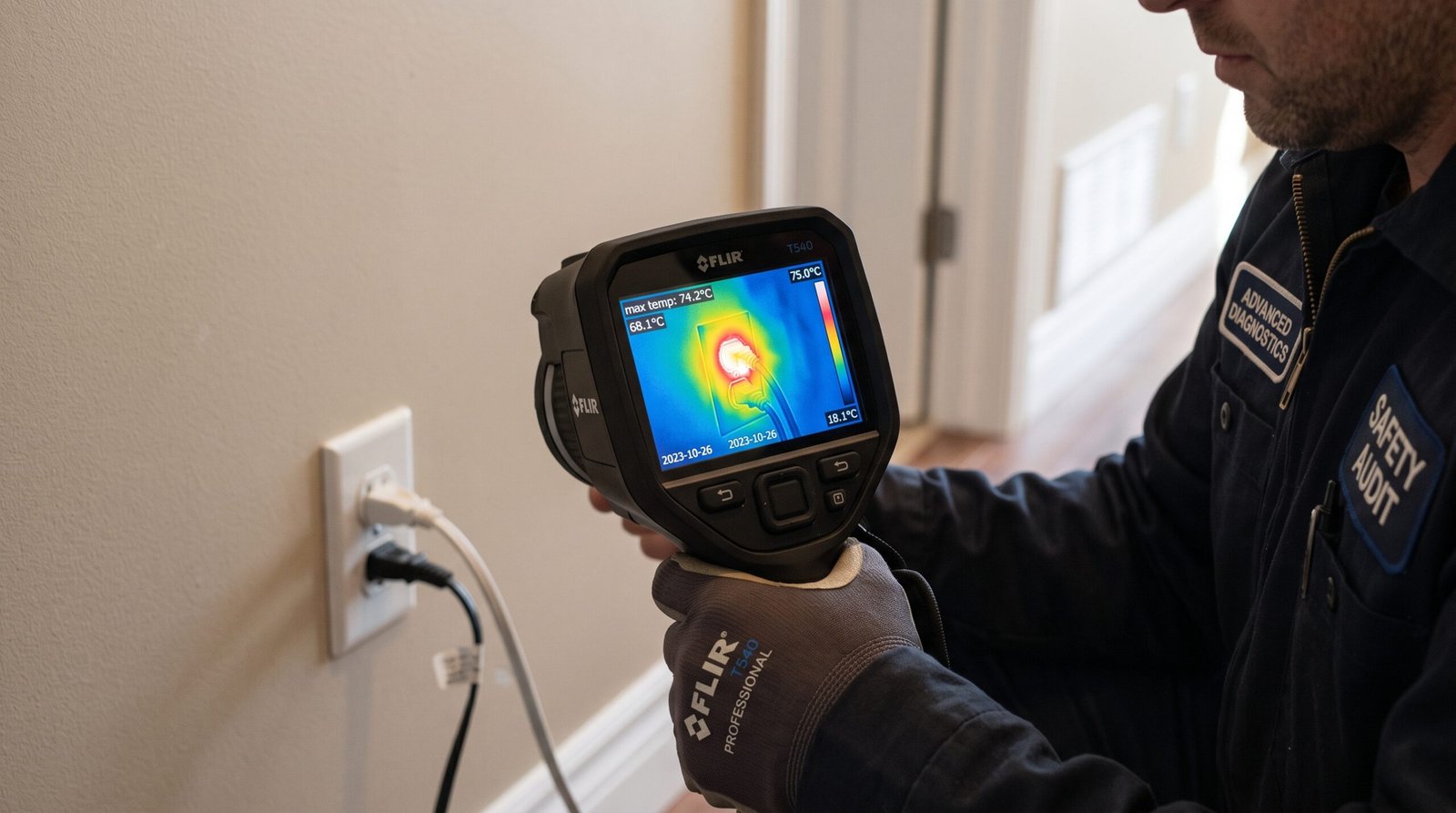
- Infrared Thermal Imaging: Thermal cameras locate precise spots where high electrical resistance generates excessive heat inside walls or panels before insulation ignites.
- Circuit Analyzers: Advanced meters measure line voltage under simulated loads, identifying high resistance points, false grounds, and severe voltage drop.
- Megohmmeters (Meggers): Test insulation integrity of hidden wires inside conduit or walls to detect breakdown before a short circuit develops.
How Much Does an Electrical Safety Inspection Cost?
The cost of an electrical inspection varies based on geographic region, square footage, and property age.
- Standard Single-Family Home (Under 2,500 sq ft): $200 – $400
- Large or Historic Homes (3,000+ sq ft or Knob/Tube): $400 – $700
- Commercial Property Inspection: $500 – $1,200+ (dependent on panel counts and phase configurations)
Is it worth the investment?
Consider this: The average residential electrical fire insurance claim exceeds $40,000 in property loss. An upfront inspection costing a fraction of that amount provides early detection, lower insurance premiums, and total peace of mind.
Understanding Your Inspection Report
Following your audit, you will receive a written report categorizing findings into prioritized action levels:
- Immediate Safety Hazards (Red Priority): Active code violations or damaged equipment presenting an imminent threat of shock or fire (e.g., double-tapped breakers, raw exposed wiring, or recalled breaker panels). These require immediate remediation.
- Recommended Upgrades (Yellow Priority): System components that are operational but outdated or struggling under heavy load (e.g., upgrading 100-amp main panel to 200-amp, installing additional kitchen dedicated circuits).
- Maintenance & Efficiency Items (Green Priority): Minor improvements to lower energy consumption, improve device access, or add convenience outlets.
Frequently Asked Questions
How long does an electrical safety inspection take?
A standard residential inspection takes between 1.5 and 3 hours. Larger properties or older structures requiring extensive attic/crawlspace access may require additional time.
Will my power be turned off during the inspection?
Power will remain on for the majority of the assessment. However, your electrician will briefly shut down main power switches for 10 to 20 minutes to perform safe physical torquing and internal panel checks.
Can an electrical inspection help lower my insurance costs?
Yes. Many home insurance providers offer policy discounts or require proof of a clean electrical inspection report before insuring older homes or certifying coverage for high-value properties.
What happens if my home fails the inspection?
An inspection is an informational report, not a municipal pass/fail test (unless tied to a city permit final sign-off). If hazards are identified, your electrician will provide a prioritized repair estimate to correct non-compliant areas on your schedule.